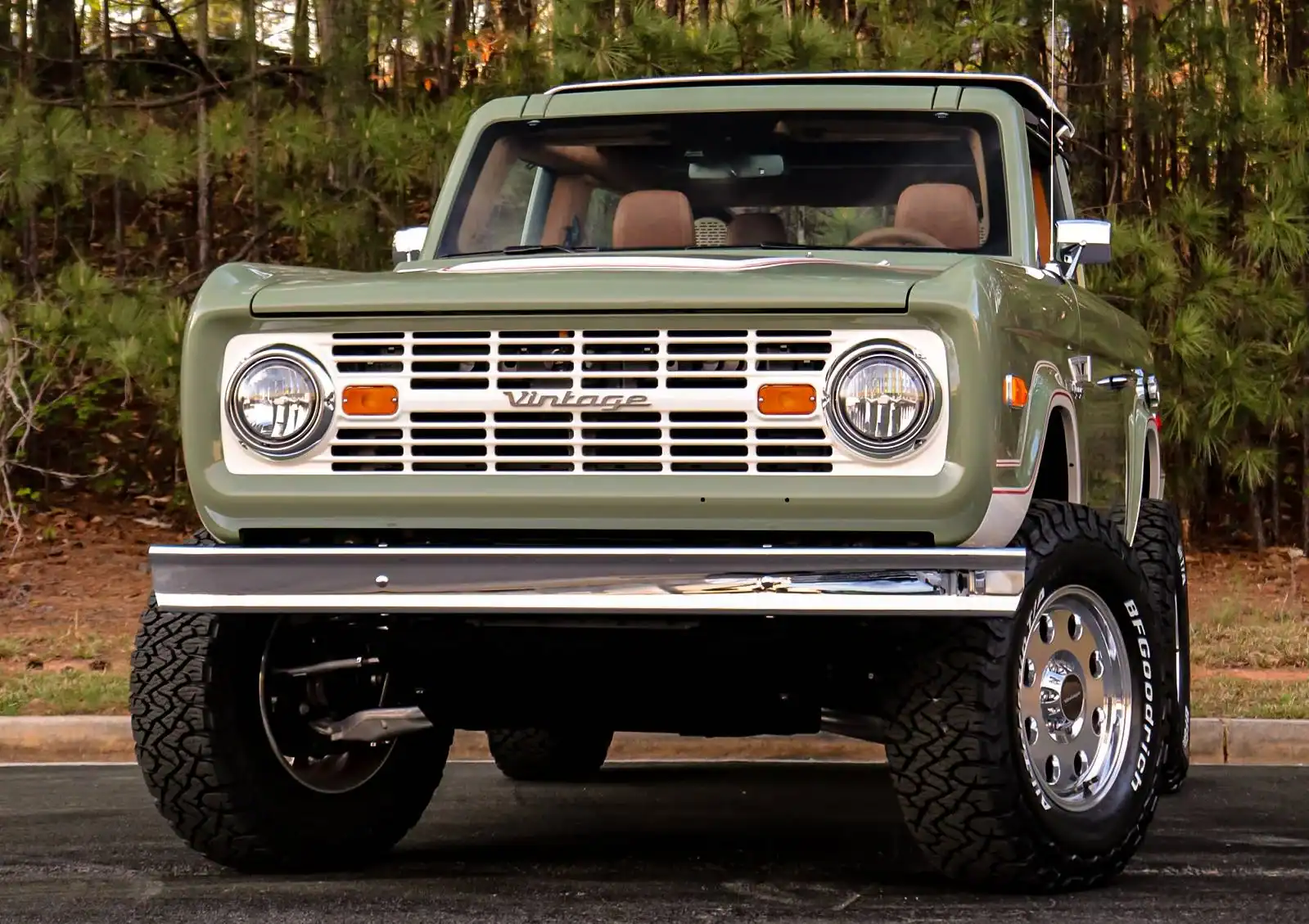
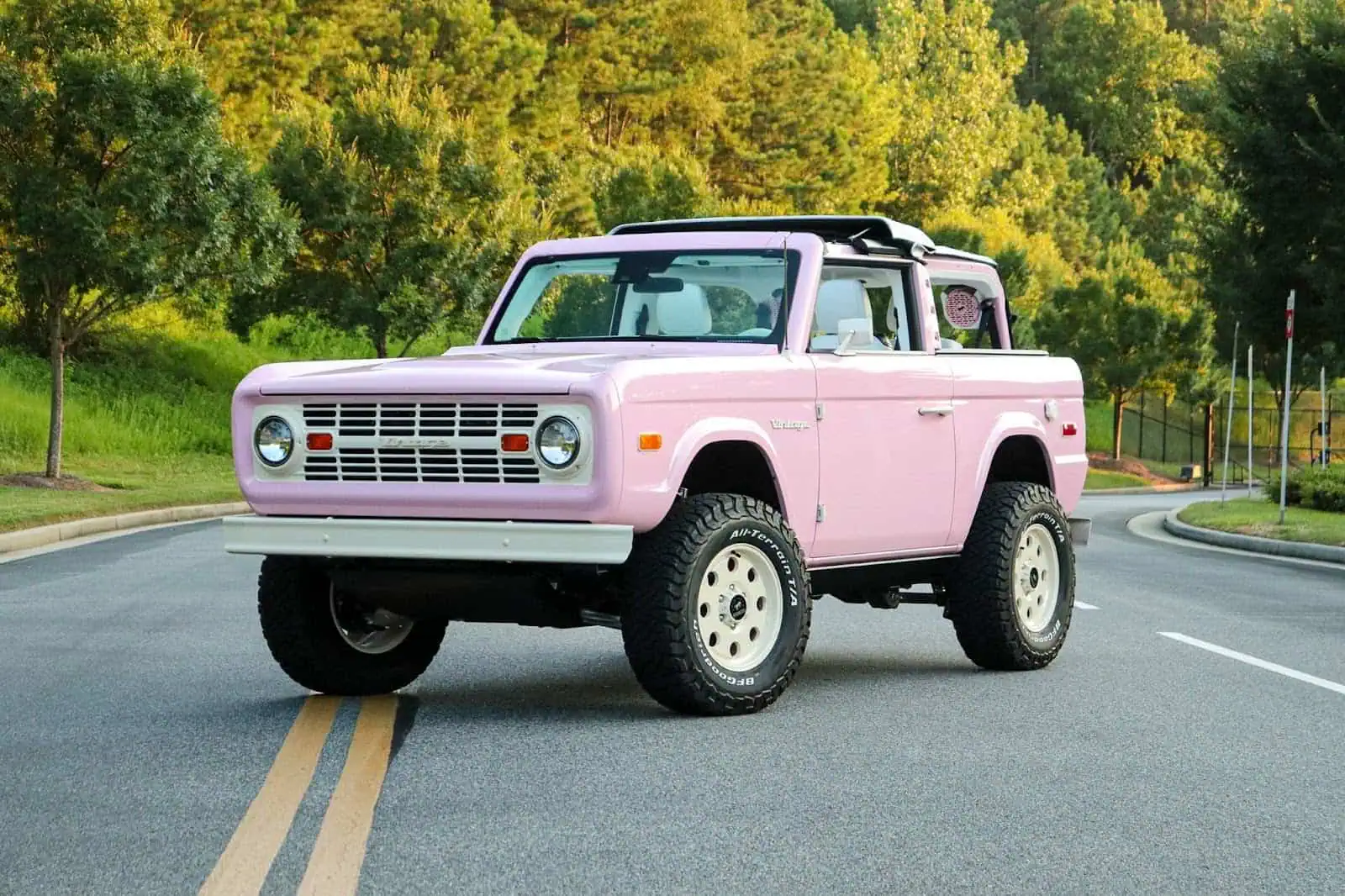
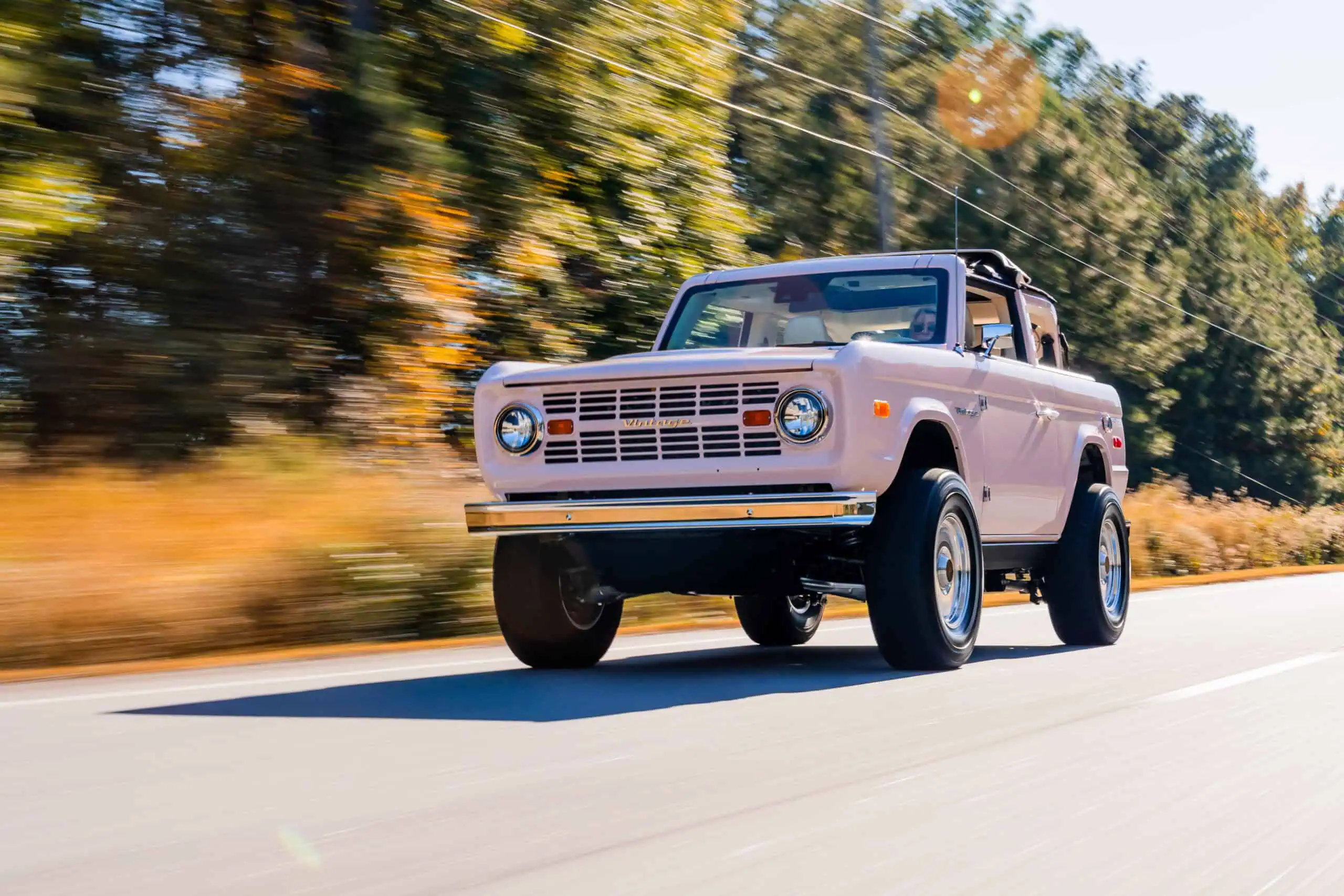
Restomod vs restoration is a question of intent. A restoration returns a vintage vehicle to the way it left the factory, using correct or period-accurate parts. A restomod (restoration plus modification) keeps the original look but replaces the mechanical and comfort systems with modern ones. A third option, the Modern Classic, skips the vintage vehicle entirely: it is a new build on a modern chassis designed to look like a 1960s classic.
This guide explains each approach, the vocabulary you will hear from builders, and the trade-offs in plain terms. If you have already done your research and are choosing what to buy, our companion page on restomods vs modern classics is written for that decision.
Table of Contents
Restomod vs restoration at a glance
| Restoration | Restomod | Modern Classic | |
|---|---|---|---|
| Goal | Factory-original accuracy | Original look, modern function | Classic look, modern vehicle |
| Starting point | Original vintage vehicle | Original vintage vehicle | Modern chassis, brand-new steel body |
| Parts | Original, NOS or correct reproduction | Mix of original body and modern components | Modern components throughout |
| Drivetrain | Original type, rebuilt | Usually modern engine, transmission or both | Modern turbocharged engine, automatic |
| Safety equipment | As originally built | Depends on the builder | Six airbags, ABS, stability control and more |
| Judged on | Correctness and condition | Quality of engineering and finish | Design, build quality and ownership support |
| Typical use | Shows, events, occasional drives | Regular weekend use, some touring | Everyday driving and road trips |
What is a restoration?
A restoration aims to return a vehicle to the condition it was in when new, or as close as the available parts allow. Paint colors, trim, upholstery patterns, engine components and even hose clamps are chosen to match how the vehicle was originally built.
Restorations are usually chosen by collectors and purists, and by owners who want to preserve a specific vehicle’s history. The reward is authenticity. The cost is that the vehicle keeps the performance, comfort and safety of its era.
How restorations are judged
Restorations are graded on correctness and condition. Hagerty’s condition scale runs from #1 “Concours,” a perfect, better-than-new vehicle rarely seen outside major concours events, to #2 “Excellent,” which Hagerty says describes the majority of fully restored vehicles, through #3 “Good” and #4 “Fair.” Knowing the scale helps you understand what a seller means by “show quality” or “driver quality.”
What a restoration typically includes
- Disassembly, often with the body removed from the frame (a “frame-off” restoration)
- Rust repair and bodywork to original panel shapes
- Paint in an original color, applied to period-correct standards
- Rebuilt original-type engine, transmission, brakes and suspension
- Upholstery, trim and badges matched to the original specification
The trade-offs of a restoration
A restored vehicle drives like a well-kept example of its era. That usually means manual or lightly assisted steering, brakes that need more distance, no airbags, and limited climate control. Parts can be hard to find, and some reproduction parts are of uneven quality. Owners typically drive restorations sparingly and store them carefully.
What is a restomod?
A restomod combines restoration and modification. The body keeps its classic shape, but the systems underneath are upgraded for performance, reliability and comfort. There is no single standard: one restomod might simply add disc brakes and fuel injection, while another replaces nearly every mechanical part.
So, what is a restomod in practice? It is a vintage vehicle that a builder has rebuilt to drive more like a modern one, within the limits of its original structure.
Common restomod upgrades
- Modern fuel-injected engine and automatic or overdrive transmission
- Disc brakes, often larger than original
- Power steering and upgraded suspension
- Air conditioning, modern wiring and LED lighting
- Digital gauges, Bluetooth audio and a modern infotainment head unit
- Custom upholstery and interior materials
The restomod spectrum
Restomods range from mild to extreme. A “mild” build looks original and drives better. A full custom build may have a new chassis, modern suspension and a high-output drivetrain. You may also hear “pro-touring,” a style of restomod focused on modern handling, braking and performance.
The trade-offs of a restomod
Even an excellent restomod is still built around an original frame and body. The geometry, the stiffness of the structure and the space available for modern systems are set by a design that is decades old. Results depend heavily on the builder, and quality varies widely. Warranty and service support are whatever that builder offers.
Restoration vs restomod: the key differences explained
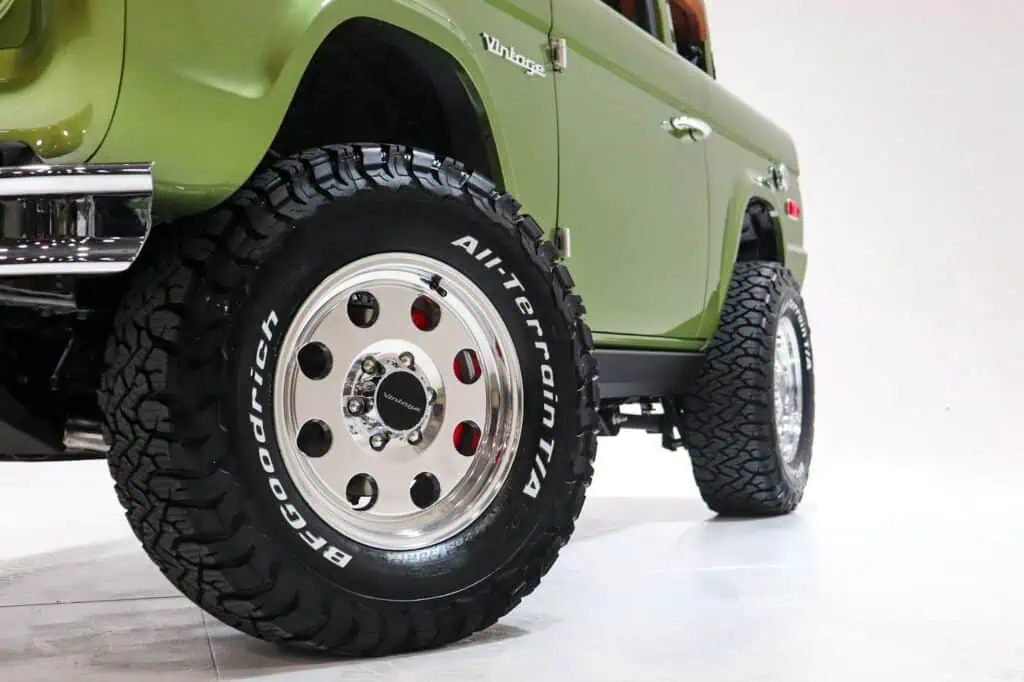
The restoration vs restomod choice touches almost every part of ownership. These are the differences that matter most.
Authenticity
A restoration preserves the original vehicle and its correct details. A restomod deliberately changes them. If originality is the point for you, a restoration is the only route. Keep in mind that a restomod usually cannot be returned to original condition without significant cost, so if you are converting an original vehicle, keep the removed parts.
Drivability
This is where restomods earn their following. Modern brakes, steering, cooling and fuel injection make a vintage vehicle far easier to start, drive and park. A restoration rewards a patient driver who enjoys the period experience, quirks included.
Safety
Neither approach adds the structure-level safety of a modern vehicle. According to the NHTSA, frontal air bags have been standard in all passenger vehicles only since the late 1990s. A 1960s or 1970s vehicle was designed long before that, so a restoration keeps its original equipment, and a restomod can only improve safety as far as its original structure allows.
Maintenance
A restoration needs the regular care of any vintage vehicle: carburetor and ignition tuning, more frequent checks, and specialists who know the model. A restomod with modern systems usually needs less routine attention, but its custom integration means repairs often go back to the builder or a specialist familiar with that build.
How each is valued
Restorations are judged largely on correctness and condition, which is why documentation and original parts matter so much to collectors. Restomods are judged on the quality of the engineering and finish, and on the reputation of the builder. Neither should be treated as a guaranteed investment. For a wider view, see our article on classic cars vs new cars.
A third option: the Modern Classic
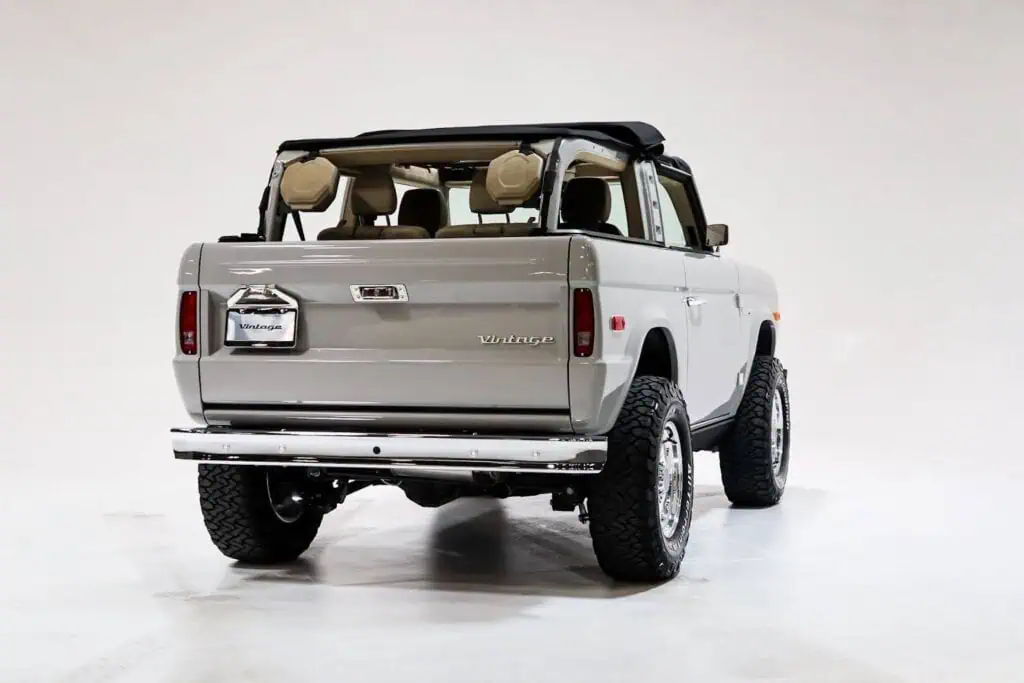
Vintage Modern, formerly Vintage Broncos, began in traditional restoration and restomods. Our founder, Chau Nguyen, bought a 1970 classic 4×4 after owning more than 50 modern performance cars, and found loose steering, poor braking, leaks, rattles and breakdowns. His question was simple: “Why can’t it look classic but operate like a modern car?”
The answer was a new category, which the company describes as the world’s first fully modernized classic. A Modern Classic is neither a restoration nor a restomod. It is handcrafted on a modern chassis with a brand-new steel body inspired by 1960s design. As Vintage Modern puts it, “This is not a restoration, it’s a modern classic.”
What changes when you start with a modern chassis
- Safety equipment: six airbags, crumple zones, side-impact beams, ABS, traction control, stability control and LATCH child-seat anchors.
- Driving feel: independent front suspension, electric power-assisted steering and Fox Factory adjustable coilovers.
- Powertrain: a modern turbocharged engine with an automatic transmission, with an optional Roush Performance Package.
- Comfort: Apple CarPlay and Android Auto, dual-zone climate control, heated seats and power windows.
- Ownership: a 3-year / 36,000-mile bumper-to-bumper warranty and traveling technicians with service in 48 states.
There is no donor vehicle, so there is no hidden rust or decades-old frame to work around. The trade-off is that a Modern Classic is a new vehicle inspired by the past, so it does not carry the history of an original. For a detailed buyer comparison, read restomods vs modern classics.
How each build comes together
The process tells you a lot about what you will end up with.
Restoration process
- Find and buy a suitable original vehicle, ideally with documentation.
- Disassemble, catalog and assess every part.
- Repair rust and bodywork, then refinish in an original color.
- Rebuild or source correct mechanical parts.
- Reassemble to original specification and shake down.
Restomod process
- Find a donor vehicle that suits the plan and budget.
- Strip the vehicle and repair or reinforce the frame and body.
- Select and engineer the modern drivetrain, brakes and suspension.
- Integrate wiring, climate control and electronics.
- Finish the interior and paint, then test and tune.
Modern Classic process
- Choose your specification in the online configurator, which covers 13 stages including body color, interior, wheels and performance.
- Refine materials and details with the Vintage Modern team.
- The vehicle is handcrafted in Atlanta on a modern chassis with a brand-new steel body.
- Delivery, followed by white-glove concierge service.
You can read more about step two in how we customize each build.
Questions to ask any builder
Whichever route you choose, the builder matters as much as the approach. These questions apply to restorations and restomods alike, and most also apply to a new build.
- What is the starting vehicle, and what is its history? Ask for photos of the vehicle before work began, especially the frame and floors.
- Which parts are original, which are reproduction and which are modern? A written parts list protects you now and when you sell.
- Who engineered the modern systems? For a restomod, ask how brakes, steering, wiring and cooling were matched to each other, rather than only which brands were used.
- What safety equipment is fitted? Get the list in writing, including what is not fitted.
- What warranty is offered, and who services the vehicle? Ask where you would take it for repairs if you live far from the shop.
- How is the timeline managed? Restorations and restomods often uncover hidden work once a vehicle is stripped, so ask how changes in scope are quoted and approved.
Clear answers to these questions are a good sign. Vague ones are a reason to keep looking.
Classic car terms you will hear
Builders and sellers use a shorthand that can be confusing. These are the terms that come up most often in restomod vs restoration conversations.
- Frame-off restoration: the body is removed from the frame so every component can be restored.
- Numbers-matching: the major drivetrain components are the ones the vehicle was originally built with, which collectors value.
- NOS (new old stock): original manufacturer parts that were never installed.
- Survivor: an unrestored vehicle in largely original condition.
- Driver quality: a vehicle in good enough condition to use and enjoy, but not to win shows.
- Pro-touring: a performance-focused restomod style built for modern handling and braking.
- Donor vehicle: the original vehicle used as the starting point for a restomod.
Which approach is right for you?

Restoration suits you if you value history and correctness above convenience and plan to drive the vehicle occasionally.
A restomod suits you if you want an original vintage vehicle that drives better than stock, and you are comfortable with the limits of its original structure.
A Modern Classic suits you if you love the look but want to drive it often, including with family, with modern safety equipment and a warranty behind it. Our guide to using a classic car as a daily driver covers that scenario in detail, and why people still love classic cars explores the appeal behind all three.
Restomod vs restoration: frequently asked questions
Can a restored vehicle be turned into a restomod later?
Yes, and it is common. Keep in mind that modifying a correct restoration removes the originality that gave it much of its collector appeal, so store the original parts if you might ever want to reverse the work.
Is a restomod the same as a custom car?
Not quite. A restomod keeps the original appearance and upgrades the systems underneath. A custom build may change the body, stance and styling as well. In practice, the terms overlap, so ask the builder exactly what has been changed.
Does a Modern Classic count as a restomod?
No. A restomod starts with an original vintage vehicle. A Modern Classic starts with a modern chassis and a brand-new steel body, which is why it can include equipment such as six airbags and stability control.
Explore the Modern Classic
If the third option fits the way you want to drive, start in the Vintage Modern configurator, browse vehicles in current inventory, or contact our team by calling or texting 470-613-6507. We are happy to talk through restorations and restomods too, since we built both before we built Modern Classics.