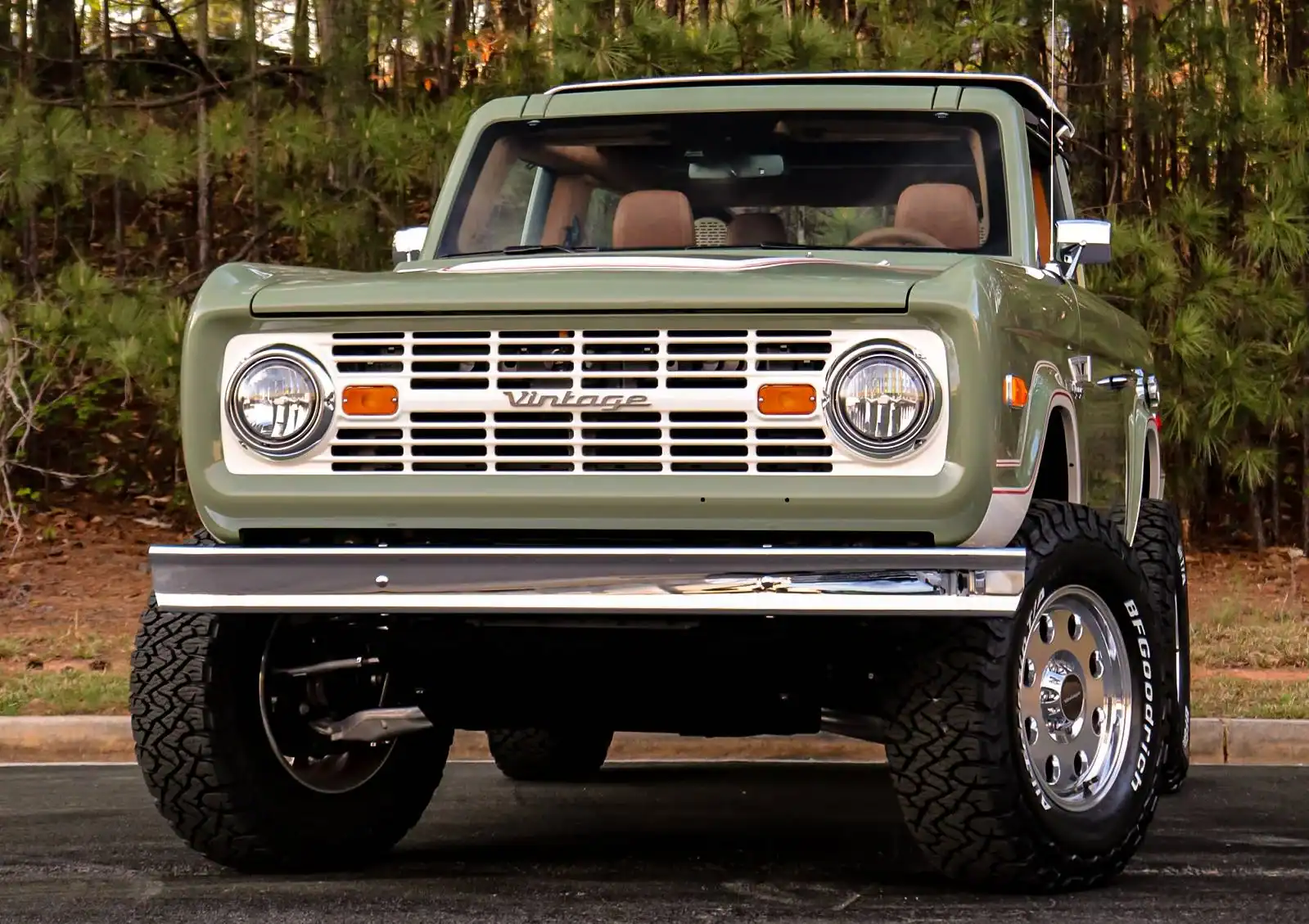
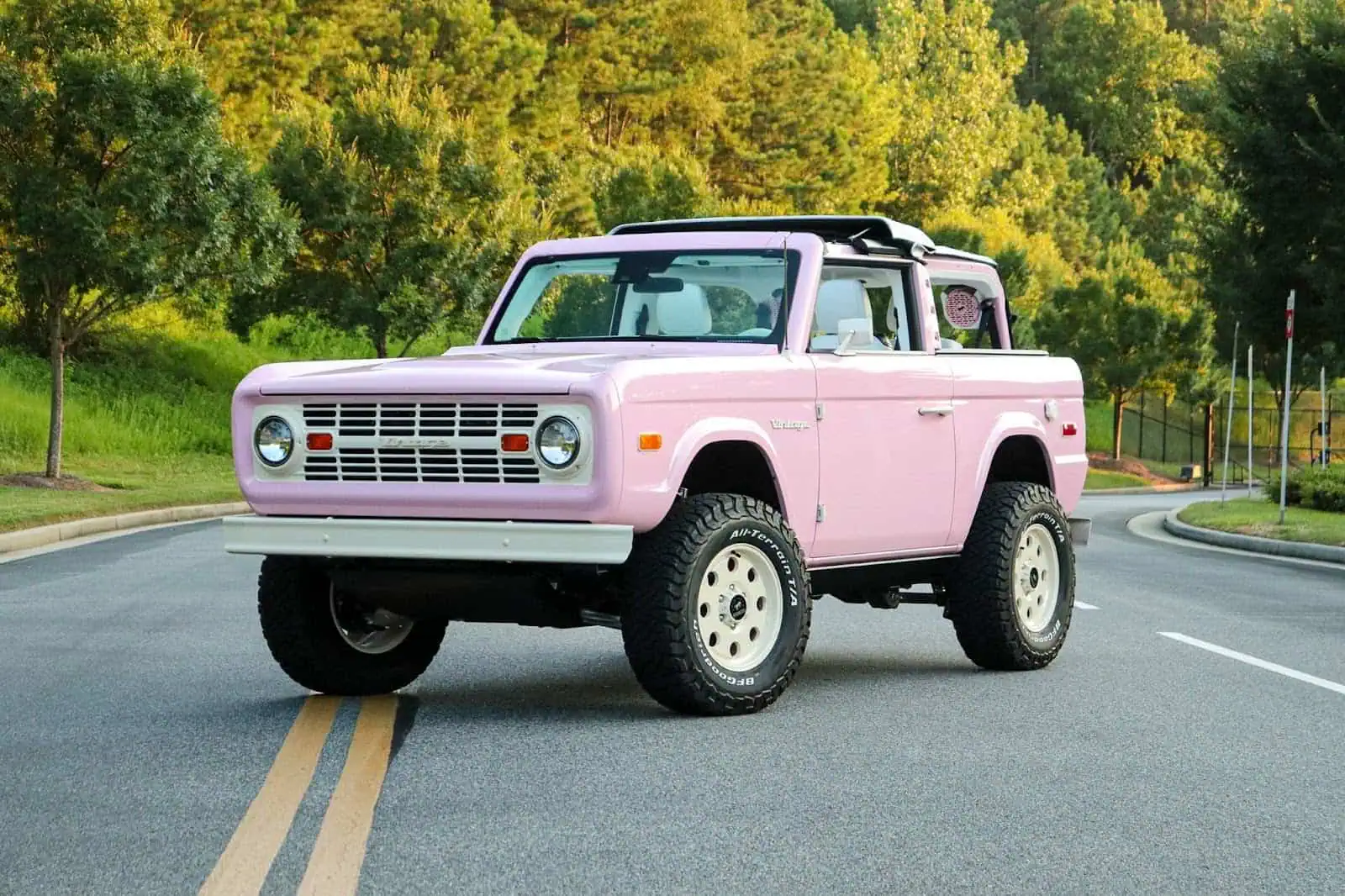
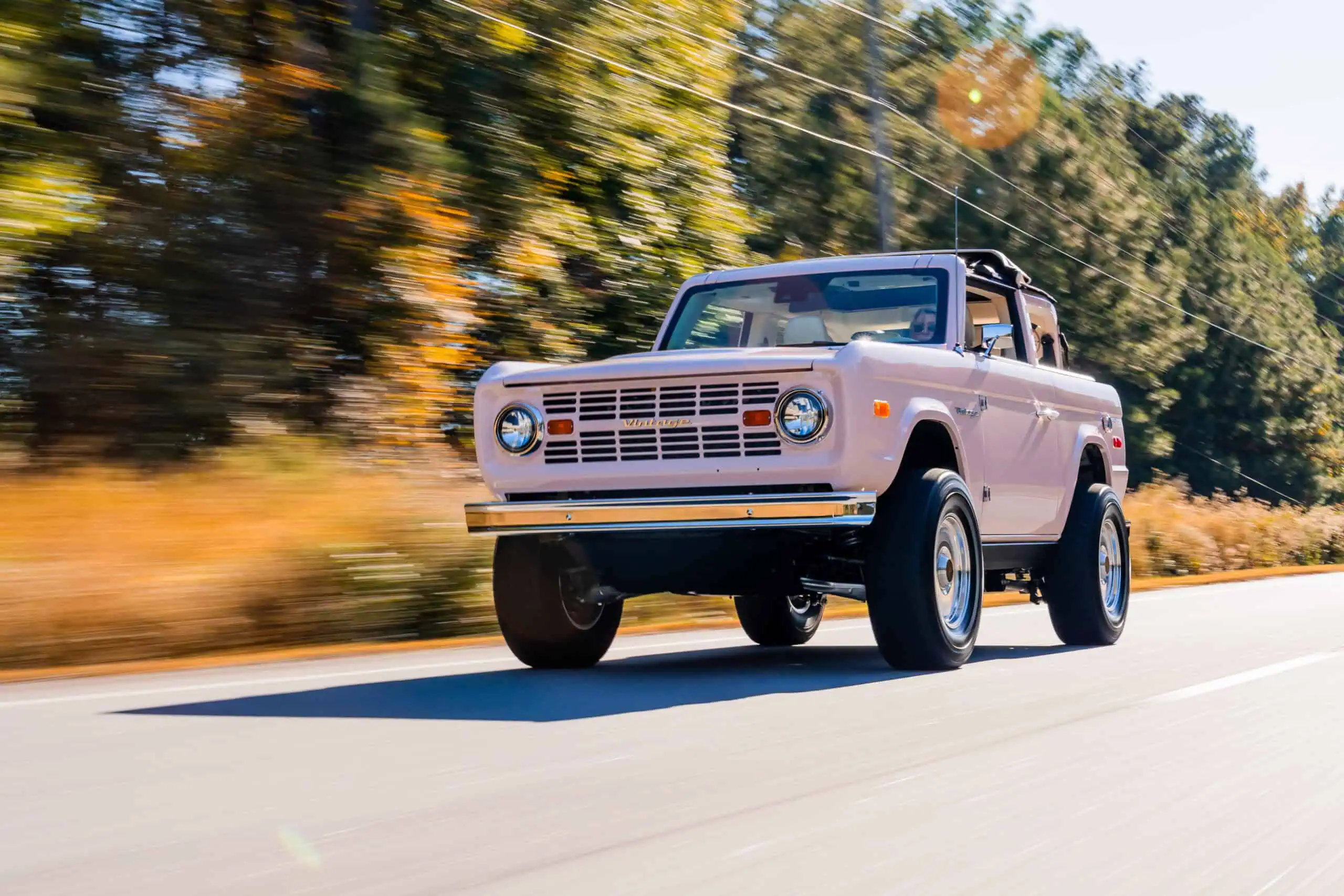
Vintage car colors give a classic-inspired vehicle its first impression. Brittany Blue can feel light and relaxed; Boxwood Green can suggest a quieter, more grounded character. The best choice is the one that works with your interior, trim and everyday surroundings—not a promise that one hue will always look newer or command a higher resale price.
If your search began with classic Bronco colors, separate historical restoration from personal inspiration. A factory-correct restoration calls for the paint code and specification of that particular vehicle. A Vintage Modern build is a different proposition: a classic-inspired vehicle with a contemporary configuration you can make your own.
Table of Contents
How to choose vintage car colors you will enjoy owning
When comparing vintage car colors, start with the whole vehicle. Paint, upholstery, top, wheels and metal finishes are visible together, so a beautiful paint sample may feel different once it sits beside your chosen leather. Decide which element should lead. If the exterior is expressive, a restrained interior may create balance. If the cabin is the focus, a quieter exterior can let the materials stand out.
Keep two or three practical questions in mind: Where will the vehicle usually be parked? What light will you see it in? How much contrast do you want between the body and roof? Your answers narrow a long list of vintage car colors into a useful shortlist, without turning a personal decision into a search for one universally “correct” color.
Brittany Blue vs Boxwood Green
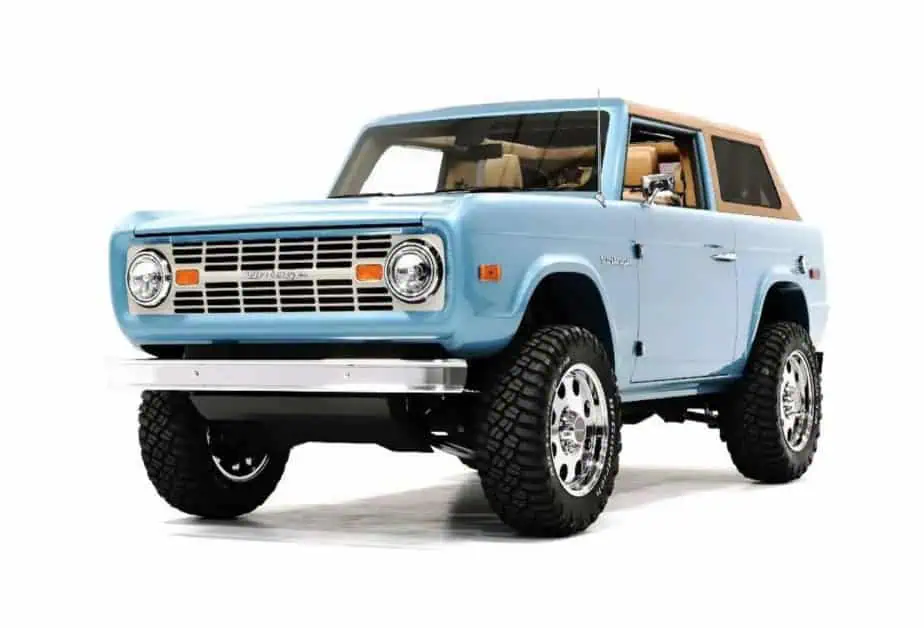
Brittany Blue: a lighter starting point
For a softer visual impression, begin with Brittany Blue. Compare it with white accents for a lighter palette or warmer leather for more contrast. Treat those pairings as design ideas to review with samples, rather than fixed rules about which interior belongs with blue.
Boxwood Green: a more understated direction
Boxwood Green offers another route to vintage-inspired character. Try it alongside warm brown leather, lighter trim or a darker wheel finish. Before choosing, compare the actual samples: a green that looks muted on a screen may show different undertones outdoors.
Neither choice is inherently more luxurious or easier to sell. Compare current inventory to see how complete combinations work, then decide which one you would enjoy seeing in your own driveway.
7 vintage car colors to compare
Vintage Modern’s current configurator lists the following exterior choices among its broader palette. These vintage car colors are starting points for a design conversation, not claims about original factory paint formulas or guaranteed availability for a particular build.
1. Brittany Blue for a light, open feel
Compare the blue with a white top and warm upholstery. Pay attention to the dashboard as well as the seats: a large painted dashboard can make the exterior color a strong part of the cabin experience.
2. Boxwood Green for a restrained statement
Use the green as a base, then compare polished and darker hardware. Looking at both versions helps you decide whether you prefer more contrast or a more continuous visual line.
3. Wimbledon White for a simple foundation
White can let upholstery, wheels and small trim details become the focus. View it next to your chosen interior sample so you can judge the relationship between the two light or warm tones.
4. Cabernet for a deeper color story
A deeper red can be a useful alternative when you want color without a bright primary-red effect. Compare it with a restrained interior first, then decide whether contrasting stitching adds to the combination.
5. Chalk Gray for a quieter exterior
Try gray with both warm and darker leather samples. Small differences in undertone can change whether the combination feels soft or crisp, which is easier to judge in person than in a photograph.
6. Seafoam Metallic for a distinctive finish
Ask to see a representative finish sample from more than one angle. Metallic appearance depends on lighting and viewing angle, so a flat color swatch on a phone is only the beginning of the decision.
7. Raven Black for stronger contrast
Black gives you a different way to frame bright trim or lighter upholstery. Before committing, discuss your washing routine and expectations for finish appearance with the team rather than assuming any dark color will hide wear.
Build the exterior and interior palette together
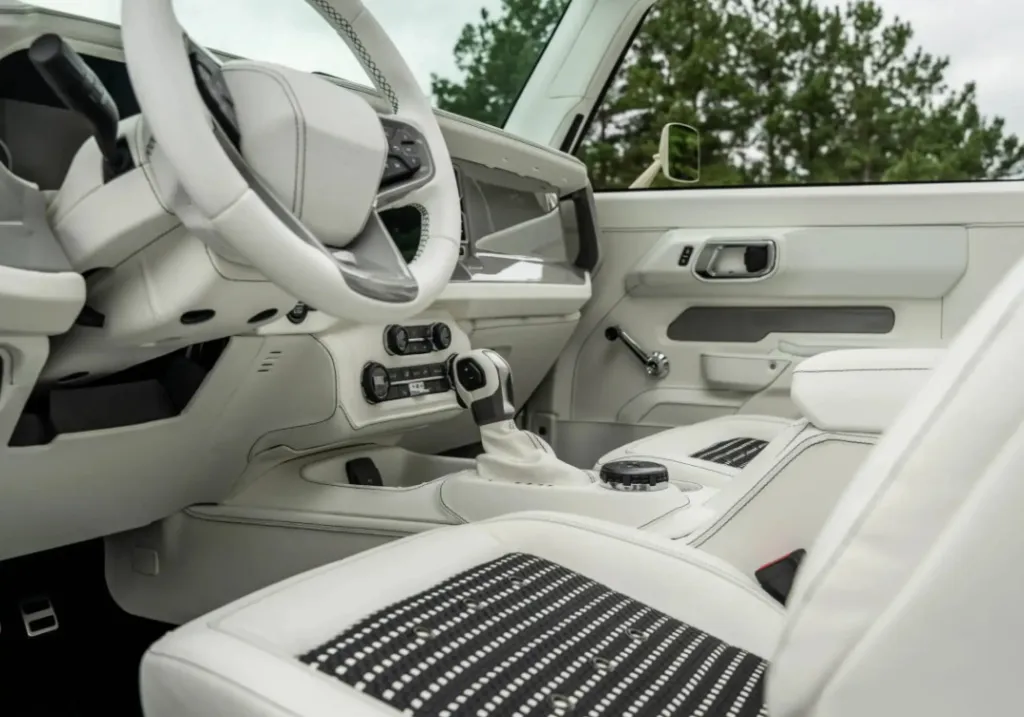
The configurator currently names leathers including Ball Glove, Cognac, Tobacco Leaf, Worn Glove, Malt, Chocolate and Espresso Brown, with several stitching options. Confirm the selections offered for your build instead of relying on an older fixed count of available interiors.
Set your shortlisted vintage car colors beside the leather samples, then add the proposed roof, wheel and metal finishes. If everything is competing for attention, simplify one element. Our guide to customizing each build explains how those preferences enter the wider design conversation.
Check samples in daylight and artificial light
Coatings specialist BASF explains that lighting can affect color comparison: samples that appear to match under one light may differ under another. That is a reason to inspect paint and interior materials together under more than one lighting condition.
Ask to compare your shortlist of vintage car colors in direct daylight, shade and indoor lighting. Use photographs to remember the combinations, but make the final decision from representative physical samples when available. Record the agreed color name, finish and any custom reference in your build documentation.
Protect the finish without expecting the color to do the work
Choosing vintage car colors and caring for the finish are separate decisions. Ask which cleaning products are appropriate for the actual paint, film or coating on your vehicle. Ceramic coatings and paint-protection films are different products; do not assume a coating makes paint chip-proof or that every product needs the same care.
For example, XPEL publishes product-specific care instructions covering washing, drying and film edges. Follow the instructions for the product actually installed, together with the installer’s guidance. This is a care reference, not a claim that Vintage Modern installs a particular XPEL product.
What about color and resale value?
A timeless appearance is a design preference, not an investment guarantee. Future buyer demand, condition, specification and the wider market can all matter. Among vintage car colors, there is no single paint color that guarantees the strongest resale value for every classic-inspired vehicle.
Choose a palette you want to own, keep the final specification and care records, and treat resale estimates cautiously. For the wider ownership question, read classic cars vs new cars.
Vintage car colors: frequently asked questions
Are these original classic Bronco paint formulas?
This guide discusses colors offered by Vintage Modern and design ideas for a Modern Classic. It does not establish an original Ford paint code, model-year match or factory-correct restoration specification.
Can I request a custom color?
Vintage Modern’s configurator lists Paint to Sample. Ask the team about the reference sample, feasibility, approval process and price for your proposed color before finalizing the build.
Which vintage car color is best?
The best choice depends on your taste, interior, trim and intended use. Shortlist a few vintage car colors, compare representative samples in different lighting, and judge the whole vehicle rather than choosing from a single photograph.
Find your Modern Classic color palette
Start with the configurator, explore available builds, or contact our team to review your shortlist. Call or text 470-613-6507 to discuss vintage car colors and interior combinations that suit your style.
Vintage Modern is not affiliated with or endorsed by Ford Motor Company. Ford and Bronco are trademarks of Ford Motor Company and are referenced here for identification only.